
Poland's inland water network is extensive. The country holds over 7,000 lakes larger than one hectare, several major river systems — among them the Vistula, Odra, Warta, and Bug — and hundreds of reservoirs, oxbow lakes, and fish ponds. This variety of habitat supports a diverse freshwater fish fauna, with around 60 native and naturalised species recorded. For most anglers, however, the list of regularly targeted fish is considerably shorter.
What follows is a practical breakdown of the main species you are likely to encounter when fishing on Polish inland waters: where they live, what they feed on, and a few notes on seasonal behaviour that affect when and how they are best approached.
Common Carp — Cyprinus carpio
No other species dominates Polish angling culture quite like the common carp. Originally introduced to monastery fish ponds during the medieval period, it has since spread into virtually every slow-moving or still body of water in the country. The lakes of the Mazury region, the Silesian reservoir system, and the countless agricultural ponds scattered across the lowlands all hold viable carp populations.
Polish carp grow large by European standards. Fish above 10 kg are not unusual in well-managed waters, and specimens exceeding 20 kg are caught annually on certain lakes. Growth rate depends heavily on water temperature and food availability; carp in the warmer, nutrient-rich lakes of central and southern Poland typically reach catchable size faster than those in cooler northern waters.
Behaviourally, carp in Poland follow a predictable seasonal rhythm. They feed actively from late April through October, with peak activity in May–June and again in September when water temperatures sit between 16°C and 22°C. During the heat of midsummer they often become lethargic and may stop feeding for days at a time, particularly in shallower waters that warm above 25°C.
Closed season note: In most Polish fishing districts, carp are protected from spawning disturbance by local PZW (Polski Związek Wędkarski) rules. The dates vary by region — check the specific district's regulations before fishing in spring.
Northern Pike — Esox lucius
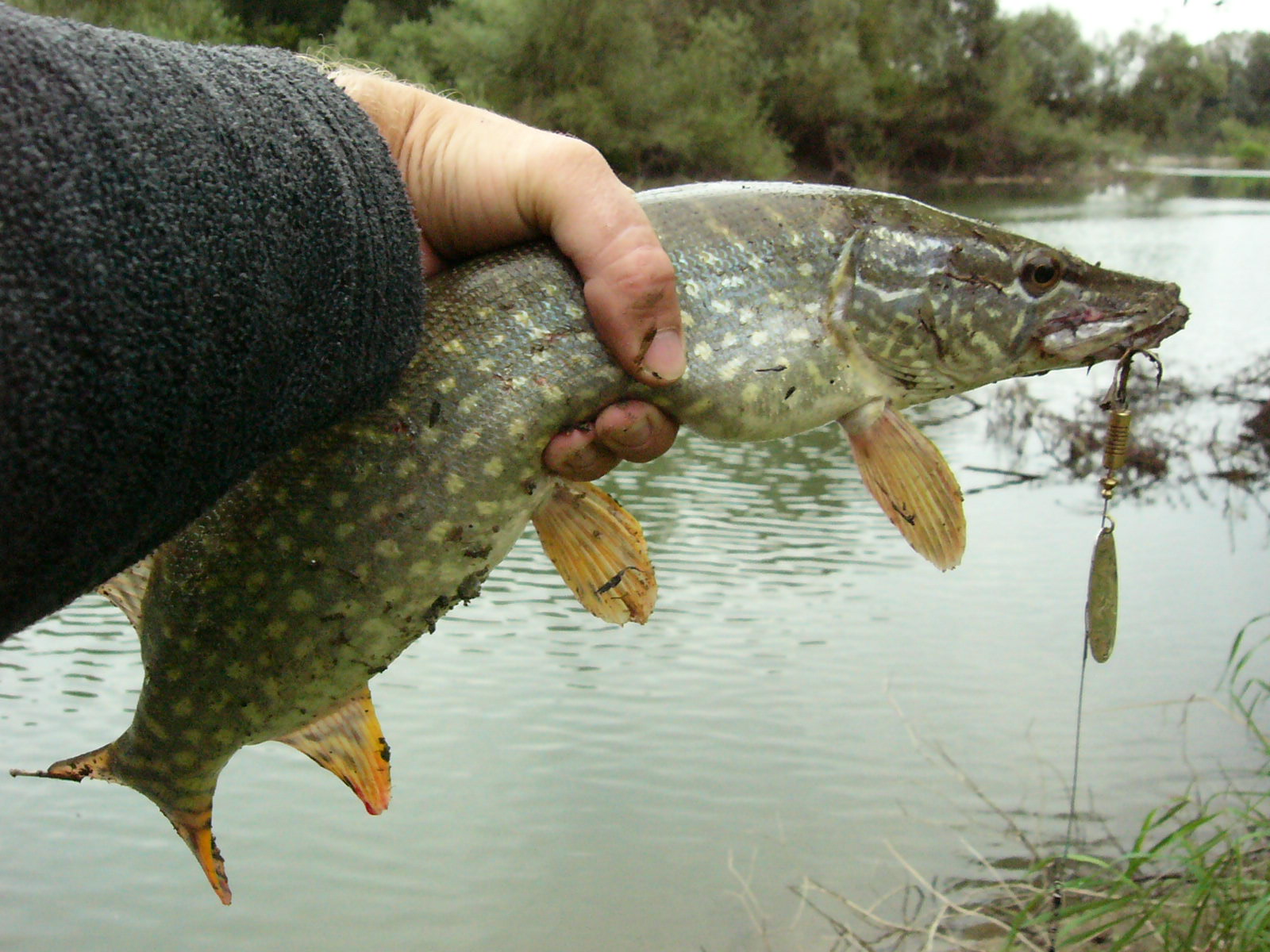
Pike are present across the full range of Polish freshwater habitats — from the reedy shallows of Mazurian lakes to the gravel runs of upland rivers and the flood-plain oxbows of the Vistula lowland. They are ambush predators that rely on cover: reed beds, submerged timber, bridge supports, and undercut banks are all typical holding spots.
The national closed season for pike runs from 1 January to 30 April. This period coincides with spawning, which occurs in late winter and early spring as soon as water temperatures climb above 4°C. Spawning typically takes place in very shallow water — sometimes just 20–40 cm deep — over submerged vegetation or flooded grassland.
Outside the closed season, late autumn is considered the prime time for large pike in Poland. As water temperatures drop in October and November, pike increase feeding activity ahead of winter. Fish that have been largely static through summer become more active and range widely in search of prey. Spinning with jerkbaits, large soft-plastics, and metal spoons accounts for most trophy catches during this period.
Minimum size nationally is 50 cm, though some waters impose a higher limit. Catch-and-release is increasingly practised, particularly on managed specimen waters.
European Perch — Perca fluviatilis

Perch are one of the most widely distributed species in Polish freshwater — found in lakes, rivers, canals, and even urban park ponds. They are shoal fish when small, forming loose groups that hunt together in open water. Larger perch (above 500 g) tend to become more solitary and territorial.
There is no national closed season for perch in Poland, and the minimum size is 15 cm — making them an accessible target year-round. Light spinning with small jigs, spinners, and finesse soft-plastics is the standard approach. In still water, float fishing with maggots or small worm sections also works consistently.
Perch feed actively throughout the day in overcast conditions, and often show best feeding spells in early morning and late afternoon on sunny days. In winter, perch continue to feed under ice — ice fishing for perch is a traditional and still widely practised activity on the lakes of northern Poland.
Common Bream — Abramis brama

Bream are a characteristic fish of lowland Poland — deep-bodied, slow-growing, and highly social. They form large shoals that move predictably between feeding areas, often following the same routes night after night. This predictability makes them a favourite among match anglers and those who enjoy methodical, groundbait-centred fishing.
The best bream fishing in Poland is found on the larger lowland lakes — Gopło, Śniardwy, Mamry, and the Włocławek reservoir on the Vistula all have significant bream populations. On rivers, the middle Warta and the lower Bug produce consistent catches.
Bream feed primarily in low-light conditions — at dusk, through the night, and in the early hours before dawn. Summer evening sessions from a pre-baited swim, using feeder tactics with maggot, caster, or small worm, produce the most reliable results. The national minimum size for bream is 25 cm.
Wels Catfish — Silurus glanis

The wels catfish is Europe's largest freshwater fish, and Poland holds some of the continent's most productive wels waters. The middle and lower Vistula and the San river in the southeast are particularly noted for large specimens. Fish above 100 kg have been caught in Poland, though most catches fall in the 5–30 kg range.
Wels are nocturnal predators with a varied diet — fish, frogs, crayfish, and occasionally waterfowl. They inhabit the deepest sections of warm rivers and lakes, typically seeking out snags, deep holes, and areas of soft substrate where they rest during the day.
Night fishing with large natural baits — dead fish, crayfish, large worms — accounts for the majority of wels catches. The most productive period runs from June through September when water temperatures exceed 18°C. Minimum size is 70 cm nationally.
Other Notable Species
Beyond the five species above, Polish waters hold a number of other regularly caught fish worth knowing:
- Tench (Tinca tinca) — A warmth-loving still-water species. Best targeted in June and July from weedy margins using float tackle and sweetcorn or bread.
- Zander (Sander lucioperca) — A predator closely related to perch. Found in large rivers and lakes. Minimum size 45 cm; closed season 1 January–30 April in most districts.
- Ide (Leuciscus idus) — A medium-sized cyprinid of rivers and connected lakes. Responds well to fly fishing in early spring when it rises to surface flies.
- Roach (Rutilus rutilus) — One of the most numerous fish in Polish waters. No closed season; minimum size 15 cm. A standard target on float tackle with maggot or bread punch.
- Grayling (Thymallus thymallus) — Confined to clean, fast-flowing upland rivers — the Dunajec, San, and Raba in southern Poland are key habitats. Protected from 1 March to 31 May.
Where to Find Species Information
For species-level detail including range maps, growth data, and ecological notes, FishBase is the standard reference. The Polski Związek Wędkarski publishes species-specific regulations on its official website, with district-level breakdowns for closed seasons and size limits.

